
H.R.H Lamidi Ọlayiwǫla Adeyęmi III, the current Alaafin, or King, of the Yoruba Kingdom of Ọyǫ. He ascended the throne in 1970. From Kokofeed online magazine, posted 18 November 2014.

Thunderstones, or Ędun ara Brooch of Şango By Yoruba Archministry (Probably designed by Ogundipę Fayọvmi) Brooklyn, NY M012

Double axe, or Oşe Nigerian Oşe Şango D025

Brazilian Candomblé Oxê of Xangô C033

Brazilian Candomblé Oxê of Xangô C076
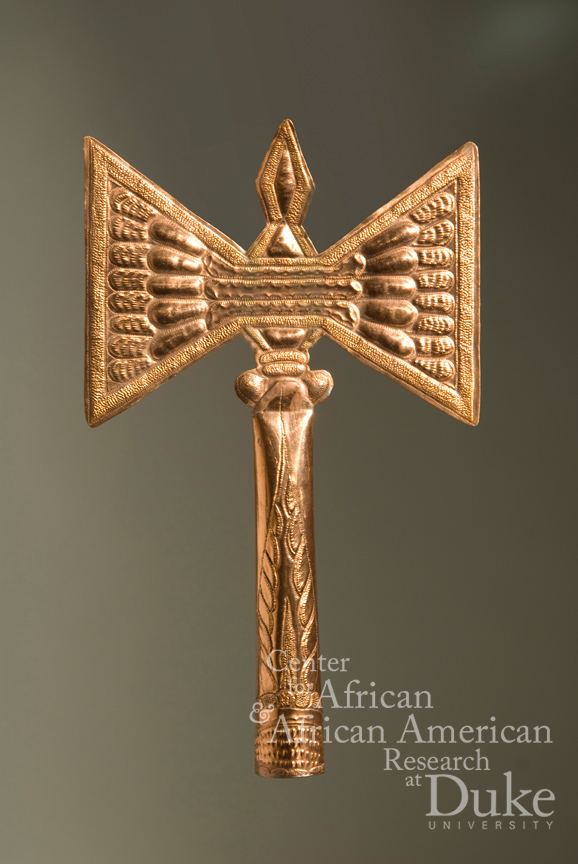
Brazilian Candomblé Oxês of Xangô

Santero Double Axe (Hacha) of Changó

“Ejikaa” Santero Double Axe (Hacha) of Changó B082

Santero Double Axe (Hacha) of Changó B023

Santería/Ocha-inspired Humidor B034

“Ṣęrę” Nigerian Şęrę of Şango D026

Oxê Xangô from Ilê Axé Opô Afonjá (Note the repetition of this unusual form in the Cuban-style tools of Changó and of Agallú) C087

Tools of Changó (Santería/Ocha) B106

Mazo of Chango Collar de mazo = Bunched Necklace. Gloria = Large bead at the juncture between bunches.


Santería/Ocha Libreta for a Child of Changó (Note leopard skin motif) B075

“Wabi” Santería/Ocha Paño (Altar Cloth) for Changó B286

"Gun = To Mount" Beninese Ęlęgun (Possession Priest) of Şango (Note Egungun-like Wabi) (from Pierre Verger’s book)


“Bandele = Changós Ritual Skirt” “Lebe”

Santería/Ocha Paño (Altar Cloth) for Changó by Nong (Note the omnipresent theme of the number 6) B250

Bate of Changó (Santería/Ocha) B007

Roman Catholic Medallion for St. Barbara B293

Sword and Double Axe of Changó (Santería/Ocha) (Note the sword) B180

Guan Gung, or Sanfancón B011

Nigerian Oşe Şango (Note the less common shape of the double-Axe) D023

Indian Copy of a 19th-Century Bahian Sculpture of Xangô C057

Brass Statuettes of Shango Possession Priests (Yoruba Archministry, Brooklyn; probably made be Ogundipe Fayomi) M002

Nigerian Odo Şango D038

Nigerian Odo Şango D109

Nigerian Apo Şango D024

Santero Batea of Changó (Note Sta. Bárbara’s tower) B328

Santero Mortar (Pilón) of Changó by David H. Brown (N.B., in ritual use, it is normally inverted.) B035


Santero Child’s Initiation Outfit (Ropa de Gala) for Changó B295

Santero Adult’s Initiation Outfit (Ropa de Gala) for Changó B302

Santero Altar Crown for Changó with Oché B099

Candomblé Crown for Xangô Airá C015

Miniature Souvenir Crown for Xangô (Brazilian Candomblé) C053

Miniature Touristic Statuette of a Candomblé Priest of Xangô C138

“Orisa Song and Dance” (2008) by Jorge Vallina B330

Bata Drums from Oyo, Nigeria D017


Brazilian Xere of Xangô C044

Santero Maraca for Changó B027

Santero Turtle-Shell Maraca for Changó B135

